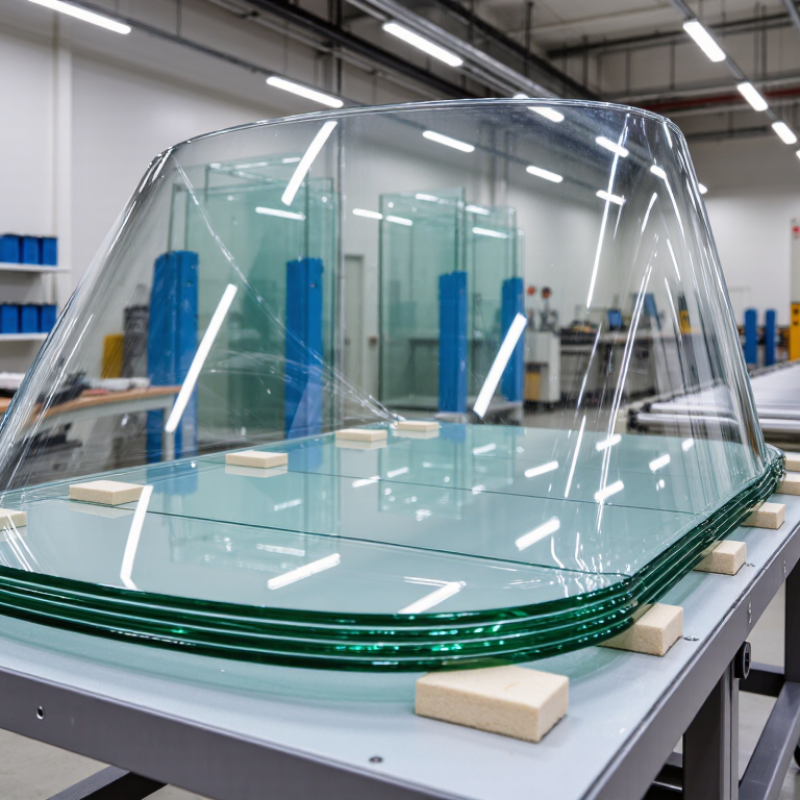
Choosing the right Front Glass for global sourcing begins with more than comparing unit prices. It requires a clear view of safety, optical quality, durability, logistics, and supplier capability. A windshield may look flawless under warehouse lighting, yet show distortion when sunlight crosses its curved surface. Small defects can become costly after installation.
Automotive glazing consultant Lena Hartmann says, “The cheapest glass is rarely the lowest-cost decision when quality, fit, and traceability are included.” Her observation reflects practical sourcing experience. Buyers should verify glass composition, thickness, curvature, edge finishing, tint consistency, and compatibility with cameras or sensors. Test reports matter. So do production records and inspection photographs.
Ask difficult questions. Can the supplier repeat the same optical performance across batches? Does the packing survive a humid sea journey? Are replacement units available when one pallet arrives damaged? These details often separate a dependable partner from a convenient quotation. I have seen sourcing plans focus heavily on price and overlook mold control, packaging strength, or communication delays. That approach can fail quietly.
A responsible evaluation should combine samples, factory audits, third-party testing, and small trial orders. Do not trust polished samples alone. Compare actual delivery performance. Keep room for uncertainty, because specifications may change between regions and vehicle models. The right Front Glass is not simply the clearest option. It is the one that remains safe, consistent, traceable, and commercially practical from production line to final installation.
When sourcing front glass globally, define the vehicle before comparing prices. Confirm the model year, body style, glass dimensions, curvature, thickness, and mounting method. Check whether the vehicle uses cameras, rain sensors, heating elements, or head-up display projection. Small differences can affect calibration and installation. I have seen low-cost glass create fitting gaps around the dashboard. That mistake delayed delivery and increased labor costs.
Climate also shapes the specification. Hot regions may require strong solar control and stable optical quality. Cold areas demand reliable resistance to thermal shock. Coastal routes can expose glass edges and fittings to salt-heavy moisture. Dusty roads increase the value of durable coatings and clear visibility. Compliance must be verified for the destination market. Request current test reports, traceability records, safety markings, and material details. Requirements can vary by country, vehicle category, and intended use. Ask a qualified local specialist to confirm approval needs before production. Documents are often treated as an afterthought. That is risky.
Choosing the right front glass begins with the product’s real working environment. A budget indoor device may use soda-lime glass. It offers clear viewing and lower cost. However, it can scratch or break more easily under daily handling. Aluminosilicate glass usually provides better strength and thermal resistance. It suits portable devices exposed to drops, pressure, and temperature changes.
Glass type is only one part of the decision. Compare thickness, surface hardness, impact resistance, light transmission, and touch sensitivity. Chemically strengthened glass can improve durability without adding much weight. Tempered glass may resist impact well, but its edges still need careful protection. Laminated glass can hold fragments together after damage, although it may increase weight and reduce design flexibility. Anti-glare and anti-fingerprint coatings improve usability, but coatings can wear unevenly.
Ask suppliers for measurable test results, not attractive samples alone. Check haze, color accuracy, coating durability, and performance after repeated bending or impact tests. Inspect edge finishing under strong light; tiny chips often become larger cracks. I have seen sourcing decisions focus too heavily on hardness. That was a mistake. A harder surface does not automatically mean better drop performance. Test the finished assembly, including adhesive, frame, and touch layer. Specifications can look excellent on paper. Real handling may reveal a different result.
Choosing front glass for global sourcing requires more than comparing unit prices. In 2023, global vehicle production reached 93.5 million units, according to OICA production statistics. That scale increases pressure on suppliers, but automotive glass remains safety-critical. The WHO Global Status Report on Road Safety 2023 recorded about 1.19 million road deaths worldwide. A reliable supplier should therefore provide evidence of compliance with UNECE Regulation No. 43 or applicable regional standards, not only a certificate.
Audit the manufacturing process in person or through an independent technical auditor. Check glass cutting accuracy, edge finishing, bending temperature records, and PVB storage humidity. Ask for furnace calibration logs and traceability from raw sheet to packed windscreen. IATF 16949 certification can indicate stronger automotive quality systems, but certification alone proves little. Inspect recent nonconformity records. Review corrective actions.
Quality controls should include optical distortion testing, impact resistance, adhesion checks, dimensions, and visual inspection under controlled lighting. Request batch-level test reports and random samples from finished production. Small flaws matter. A slight distortion near the driver’s viewing area can create discomfort or unsafe judgment. Packaging also deserves attention; corner protection and vertical separators reduce damage during international transport. One practical weakness is relying too heavily on supplier documents. Independent testing costs more, yet it can expose inconsistent results between batches. Ask suppliers to define acceptance limits clearly, then compare those limits with UNECE, FMVSS 205, or destination-market requirements.cynnwys
How to Choose the Right Front Glass for Global Sourcing?
A front glass sample should survive real handling, not only look clear under showroom lights. Check thickness, flatness, edge finish, transparency, coating uniformity, and touch sensitivity. Measure every point with the same tools. A 0.1 mm variation can affect fit and assembly pressure. Keep an approved golden sample, but do not trust it blindly. Recheck it after temperature and humidity testing.
Certifications require evidence, not attractive scans. Request test reports showing laboratory identity, standards used, sample numbers, and test dates. ISO 9001 supports process control, while IEC 60068 methods can assess heat, cold, vibration, and humidity resistance. The 2023 Global E-waste Monitor recorded 62 million tonnes of electronic waste worldwide, so buyers should also question material traceability and packaging waste. Documentation can be incomplete.
Packaging must protect corners first. Use separators, soft edge guards, moisture control, and visible carton labels. Ask for drop-test records and loading photographs. UNCTAD’s Review of Maritime Transport reports that more than 80% of global merchandise trade by volume travels by sea. Shipping readiness therefore means securing pallets against vibration, stacking, and condensation. Confirm carton dimensions, gross weight, container quantity, and insurance before production. One mistake remains common: approving packaging before testing a sealed, fully loaded carton. Repeating the test is cheaper than repeating the shipment.
A practical sourcing checklist covering sample verification, certifications, packaging protection, and shipping readiness. Each category is scored against five evidence points.
Confirm dimensional samples and visual quality first, then validate applicable safety and environmental documentation. Packaging and shipping checks should include protective separation, moisture control, pallet stability, labeling, and transport-test records.
Choosing front glass globally requires more than comparing quoted prices. A procurement team should calculate the landed cost per usable piece. Include glass, coating, cutting, packing, freight, insurance, duties, inspection, and rejected units. A low unit price can become expensive after edge chips, warping, or poor optical clarity appear. Ask suppliers for measured data, not broad claims. Check transmittance, haze, flatness, hardness, dimensions, and tolerance records from recent batches. Request samples made with the same process. Samples matter.
Supply risk deserves equal attention. Review furnace capacity, raw material sources, backup processors, and port options. Ask how quickly production can restart after a power failure or transport delay. A second supplier is useful, but only if its glass matches your assembly process. Test adhesive compatibility, touch response, thermal cycling, and drop performance before approval. Keep safety stock based on actual lead-time variation, not optimistic promises. Some buyers store too little and pay premium freight later. I have seen schedules fail because one missing certificate stopped an entire shipment. Verify export documents, packaging labels, and inspection reports before loading.
Long-term support should be written into the supplier relationship. Define response times for defects, engineering changes, traceability, and corrective actions. Request a named technical contact and a clear escalation path. Quarterly reviews can reveal rising breakage or coating drift early. Still, do not assume a friendly sales call equals reliable support. Measure response quality over several incidents. One weakness remains: forecasts are rarely accurate. Share rolling demand estimates, but maintain a realistic contingency plan. The best supplier protects quality when volumes, designs, or shipping routes change.
| Front Glass Option | Typical Construction and Features | Indicative EXW Price | Estimated Freight, Insurance and Handling | Estimated Duty and Import Charges | Estimated Landed Cost | Typical Lead Time | Minimum Order Quantity | Supply Risk | Quality and Compliance Considerations | Long-Term Supplier Support | Overall Sourcing Score |
|---|---|---|---|---|---|---|---|---|---|---|---|
| Standard Clear Laminated Glass | 4.7 mm to 5.5 mm laminated safety glass with clear interlayer; suitable for basic vehicle applications without camera or display integration. | $38–52 | $7–11 | $5–9 | $50–72 | 35–50 days | 300–500 pieces | Low to Medium | Confirm optical distortion, edge quality, impact resistance, fragmentation behavior, and compliance with the destination market’s automotive glazing requirements. | Usually strong for repeat orders, basic drawings, packaging improvements, and standard replacement tooling. | 8.1 / 10 |
| Acoustic Laminated Glass | Multi-layer acoustic interlayer designed to reduce road and wind noise; commonly used in passenger vehicles and premium cabins. | $55–78 | $8–13 | $7–12 | $70–103 | 45–65 days | 300–600 pieces | Medium | Validate acoustic performance, interlayer bonding, haze, optical distortion, and performance after humidity and temperature cycling. | Requires stronger technical support for acoustic targets, process control, warranty analysis, and engineering changes. | 8.0 / 10 |
| Solar-Control Laminated Glass | Glass with solar-control coating or tinted interlayer to reduce solar heat and ultraviolet transmission while maintaining required visibility. | $62–88 | $8–14 | $8–14 | $78–116 | 50–75 days | 400–800 pieces | Medium | Check visible light transmission, color consistency, coating durability, radio or sensor compatibility, and resistance to thermal stress. | Useful when the supplier provides color-control records, coating traceability, sample retention, and structured corrective-action reports. | 7.7 / 10 |
| HUD-Compatible Laminated Glass | Special wedge-shaped interlayer or controlled optical construction intended to reduce double images in head-up display applications. | $95–145 | $10–17 | $12–22 | $117–184 | 70–100 days | 500–1,000 pieces | High | Requires tight control of wedge angle, optical distortion, HUD image quality, curvature, tooling accuracy, and dimensional capability. | Supplier must support optical simulation, prototype validation, measurement reports, tooling maintenance, and fast engineering-response cycles. | 7.2 / 10 |
| ADAS Camera-Ready Glass | Laminated windshield with camera window, optical clear zone, printed masking, mounting references, and compatibility with driver-assistance sensors. | $82–128 | $9–16 | $10–19 | $101–163 | 65–95 days | 500–1,000 pieces | High | Verify camera-zone distortion, transparency, bracket position, printed ceramic accuracy, calibration requirements, and compatibility with the vehicle’s sensor system. | Strong suppliers provide prototype iterations, optical inspection data, calibration guidance, change-control procedures, and field-failure analysis. | 7.4 / 10 |
| Recycled-Content Laminated Glass | Standard or upgraded laminated glass using documented recycled material content in the glass or packaging system, subject to local availability. | $45–68 | $7–12 | $6–11 | $58–91 | 45–70 days | 500–1,000 pieces | Medium | Request recycled-content evidence, batch traceability, optical consistency data, contamination controls, and confirmation that safety performance is unchanged. | Best results come from suppliers that maintain environmental documentation, stable material sourcing, and transparent sustainability reporting. | 7.8 / 10 |