What Is a Plant Growth Glass Plate Used For?
A Plant Growth Glass Plate provides a clear, stable surface for observing plants during controlled growth studies. Depending on its design, it may support seedlings, separate samples, or help researchers photograph roots and shoots without moving them. The exact use depends on the plate’s size, coating, and setup. It is not a growth solution by itself.
Plant physiologist Dr. Bruce Bugbee is known for research on controlled plant environments. A relevant takeaway, paraphrased from his work rather than presented as a verbatim quotation, is: “Measure the growing conditions, not just the plant.” That matters here. A plate can make observation easier, but light, moisture, temperature, and cleanliness still affect what you see. A cloudy surface or a trapped water droplet can distort a small root.
Small details count.
In this guide, we’ll look at common uses for a Plant Growth Glass Plate, the settings where it can be helpful, and the features worth checking before use. We’ll also note its limits. Glass may be easy to clean, but it can break, reflect light, or create glare in photographs. Those drawbacks are easy to overlook. The practical question is not whether a plate looks precise, but whether it improves observation without changing the plant’s growing conditions.
What Plant-Growth Glass Plates Are: Greenhouse Glazing and Research Surfaces
A plant-growth glass plate can mean two different things: greenhouse glazing or a flat surface used in plant research. In a greenhouse, panes admit sunlight while shielding crops from wind and rain. Clear glass transmits about 90% of light, according to the greenhouse-covering values in NRAES-33, Greenhouse Engineering. Actual light reaching leaves can be lower. Dust, condensation, framing, and the sun’s angle all matter. A clean pane above seedlings may look simple, but small losses accumulate across a growing season.
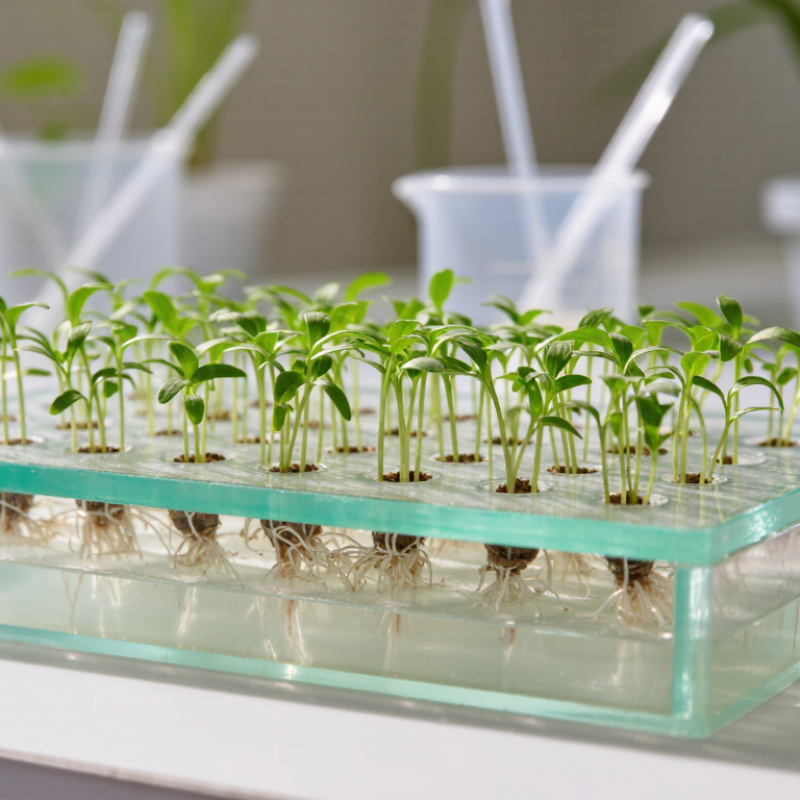
In a laboratory, a glass plate can provide a smooth, visible surface for observing seeds, roots, or plant tissue under controlled conditions. Researchers may place a sample against the plate for imaging, or use it to separate a specimen from its support. It is not a substitute for growing media, and the setup must suit the species and experiment. That distinction matters. USDA’s 2022 Census of Agriculture reported $18.3 billion in U.S. greenhouse, nursery, and floriculture product sales, showing the scale of protected growing operations; the figure does not measure glass use specifically. Researchers and growers should check light transmission, surface cleanliness, and temperature effects for their exact setup. The word “plate” remains a little ambiguous. Context clarifies it.
How Glass Transmits PAR: The 400–700 nm Plant-Active Wavelength Range
What Is a Plant Growth Glass Plate Used For?
A plant growth glass plate admits sunlight while protecting crops from wind, rain, and sudden temperature changes. Its light value depends on more than how clear it looks. Plants use photosynthetically active radiation, or PAR, conventionally defined as wavelengths from 400 to 700 nanometers. These photons power photosynthesis, but plants do not respond equally to every wavelength.
McCree’s 1972 Agricultural Meteorology study measured photosynthetic action spectra in 22 crop species. It showed that photosynthetic response varies across the PAR range, with useful activity in both blue and red wavelengths. A glass plate therefore needs to transmit a broad band, not merely appear bright to the human eye. Visible-light ratings use human vision as their reference and cannot, by themselves, describe PAR transmission. Check spectral-transmittance data across 400–700 nm. Small losses matter.
In practice, transmission changes with glass thickness, surface coatings, light angle, dust, and condensation. ASTM G173 provides a standardized reference solar spectrum for evaluating sunlight, though it does not certify a particular pane’s performance. A clean plate at midday may pass light differently from a damp one under a low winter sun. That detail is easy to overlook. It is also why growers should compare measured spectral data under stated test conditions, rather than rely on “clear glass” as a complete specification.
Horticultural Glass Performance: Typical Light Transmission Near 90%
What Is a Plant Growth Glass Plate Used For?
A plant growth glass plate forms the roof or wall of a greenhouse, letting daylight reach crops while protecting them from wind and rain. Its key measure is light transmission: how much incoming light passes through the panel. For horticulture, growers often focus on photosynthetically active radiation, or PAR, the 400–700 nm range plants use for photosynthesis. Technical tables in Aldrich and Bartok’s Greenhouse Engineering (NRAES-33) place clear greenhouse glass near 90% transmission under favorable conditions. Close to nine photons in ten.
That figure is a useful benchmark, not a guarantee. Dust, condensation, glass thickness, framing, and the sun’s angle can all reduce light reaching leaves. A clean panel may perform differently from one shaded by rafters or coated with grime. The distinction matters on a cloudy winter morning, when a few lost percentage points can further limit daily light. Glass plates are therefore used where durable, high daylight entry is important, including greenhouses and propagation spaces. They can also help create a more stable growing environment, though they do not control temperature on their own.
For a practical comparison, measure PAR below the glazing rather than relying only on a product’s stated transmission. Take readings at several points; frame shadows can create uneven patches across a bench. I would treat “90%” as a starting point, not a crop-performance promise. Actual results depend on the whole structure, and that is easy to overlook.
Using Glass Plates in Growth Chambers to Observe Seedlings and Roots
What Is a Plant Growth Glass Plate Used For?
Using Glass Plates in Growth Chambers to Observe Seedlings and Roots
A glass plate provides a clear, stable surface for viewing seedlings as they develop inside a growth chamber. When roots grow against the glass, researchers can inspect their length, branching, and direction without disturbing the plant. The plate also helps keep seedlings aligned, making comparisons between samples easier.
Small details matter.
For a useful view, place seeds consistently and keep the supporting material evenly moist, not soaked. Excess water can blur root outlines or encourage unwanted growth. Check the plate for condensation, too; droplets can hide fine root hairs and make photographs harder to compare. Gentle, even lighting usually reveals more than a bright beam reflected across the glass.
A plate is not a perfect window. Roots may press against the surface differently than they would in loose soil, so observations should be interpreted with care. Record the chamber’s temperature, light schedule, and watering conditions alongside each image. A ruler or scale in the frame helps track growth over time. The setup can feel fussy, and small shifts in seed position may change what you see. That is worth noting in the record.
How to Choose Glass Thickness, Coatings, and Safety for Plant-Growth Uses
A plant-growth glass plate may cover a propagation tray, separate a humid growing space, or support a sensor above seedlings. Its thickness should match the clear span, support points, and expected load. A small plate resting evenly on a frame may need less thickness than a wide shelf carrying wet pots. Check the supplier’s load data; appearance alone is not a reliable guide. Small details matter.
For light, consider the spectrum your plants need and how the plate changes it. Clear glass transmits visible light, while low-iron glass can reduce a green tint. Coatings may reduce reflection or block selected wavelengths, but they can also affect transmission and cleaning. Ask for measured transmission data across the relevant wavelengths, not just a general claim of “high clarity.” Condensation and dust can reduce light too.
Safety deserves equal attention. Tempered glass is stronger against impact than ordinary annealed glass, but it can still break, and its edges need protection. Use a properly supported plate, smooth or guarded edges, and a design that avoids point pressure. Heat from grow lights can create uneven temperatures, especially near a cool frame or damp surface. I would not assume one thickness or coating suits every setup; check dimensions, temperature conditions, and care instructions before choosing. Even careful planning has limits.
Plant-Growth Glass: Thickness and Approximate Weight
Approximate glass mass per square metre, calculated using a typical soda-lime glass density of 2,500 kg/m³. Actual weight varies by product and thickness tolerance.
Choosing glass: Thicker panes weigh more and may be appropriate for larger spans, but the required thickness depends on pane size, support, wind and other loads. For plant growth, check that any coating or tint transmits photosynthetically active radiation (PAR, approximately 400–700 nm); coatings can change light transmission. Select safety glazing where required by local codes: tempered glass breaks into smaller pieces, while laminated glass helps hold fragments together. Consult a qualified glazing professional for structural and safety requirements.


 Phone
 Send Email
 whatsapp
 Facebook