inquiry
Leave Your Message

Why Choose Anti-Reflective Glass for Global Projects?

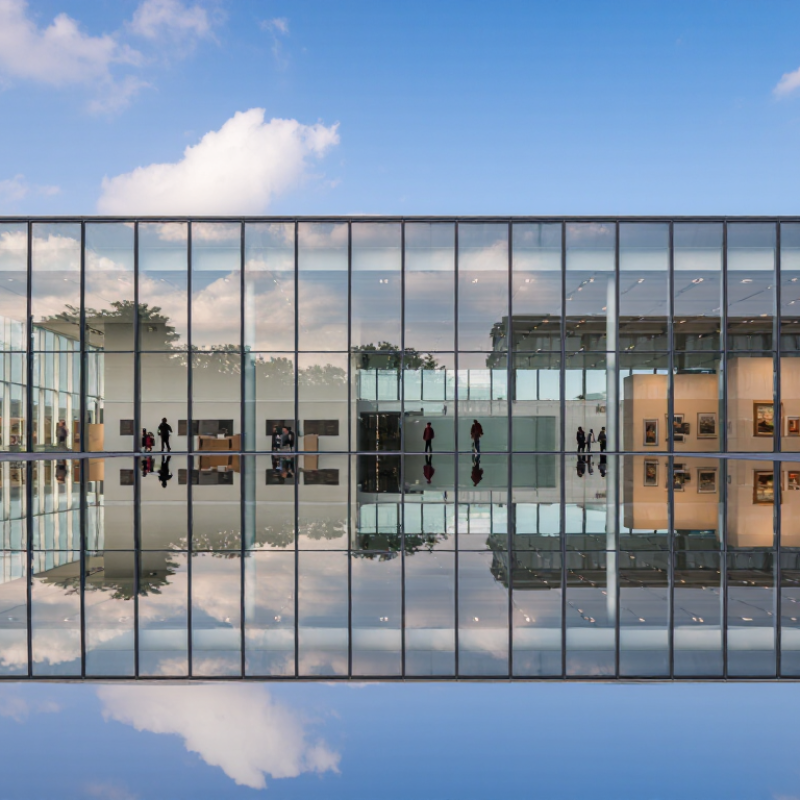
Choosing the right glass can shape a project’s visual quality, energy performance, and long-term maintenance costs. Anti-Reflective Glass reduces surface reflections, allowing daylight, displays, and architectural details to appear more clearly. In a museum, visitors may see artwork instead of ceiling lights. At an airport, passengers can read digital signs with fewer distracting reflections.

Global projects create additional challenges. Climate, façade orientation, local construction practices, and cleaning routines can vary widely. A specification that performs well in a cool European city may require adjustment for intense sunlight, dust, or coastal humidity. Project teams should review visible light transmission, solar control, durability, color neutrality, and safety performance together. Manufacturer test reports and independent verification provide stronger evidence than attractive product claims.

Details matter.

Experienced façade consultants often compare samples under real lighting conditions. A small glass panel can reveal color shifts that drawings cannot show. Anti-Reflective Glass may improve visibility, but it is not a universal solution. Coatings can require careful handling, compatible sealants, and disciplined installation. These requirements are sometimes underestimated. That mistake can affect both appearance and warranty discussions.

Reliable decisions come from documented performance, qualified suppliers, and clear inspection procedures. Teams should also consider replacement access and regional service support. The best choice balances optical clarity with practical project risks. It may not be the most advanced product available. It should be the most suitable one for the building, users, climate, and budget.

Why Choose Anti-Reflective Glass for Global Projects?

What Is Anti-Reflective Glass and How Does It Work?

Why Choose Anti-Reflective Glass for Global Projects?
What Is Anti-Reflective Glass and How Does It Work?

Anti-reflective glass uses a thin optical coating to reduce light bouncing from its surface. The coating contains carefully designed layers that create destructive interference. Reflected light waves partly cancel each other. More light then passes through the glass.

This effect improves visibility in museums, airports, offices, and retail displays. Objects behind the glass appear clearer, even under strong ceiling lights. Exterior façades can also show less glare across changing daylight conditions. However, performance depends on viewing angle, glass thickness, coating design, and local weather. No coating removes every reflection. That matters.

For international projects, reliable selection should begin with measured data, not appearance alone. Check visible light transmission, reflected light percentage, color shift, durability, and cleaning requirements. Coastal air, dust, humidity, and frequent maintenance may affect long-term results. Designers should also review samples under real lighting. Digital images can be misleading. A small sample may look perfect, while a large façade reveals uneven reflections.

Tips: Compare samples at several angles. Test them in morning and evening light. Ask for independent performance reports. Confirm compatibility with insulation, lamination, and framing systems. Leave room for uncertainty; project conditions are rarely identical.

Which Performance Benefits Make It Suitable for Global Projects?

Anti-reflective glass improves light transmission by reducing front-surface reflection. That matters. In photovoltaic modules, even small optical gains can increase annual electricity yield.

Fraunhofer ISE’s Photovoltaics Report 2024 identifies front-glass optical loss as a continuing efficiency constraint. Technical studies commonly show AR treatments reducing reflection from about 4% to near 1% within selected wavelengths.

For large solar farms, this difference can become meaningful across thousands of square metres.

The benefit also applies to buildings. The International Energy Agency reports that buildings consume about 30% of global final energy and create roughly 26% of energy-related emissions. Higher visible transmission can support daylighting and reduce dependence on electric lighting.

Clearer façades also improve visibility through display areas, transport hubs, and public interiors. Less reflected sky and surrounding structures can improve visual comfort. Not always. Excessive transmission may increase solar heat gain or glare, depending on orientation and climate.

Global projects need stable performance across dust, humidity, salt, frost, and repeated cleaning. Coating adhesion, abrasion resistance, and optical durability should therefore be checked against relevant ISO, EN, or ASTM test methods.

A laboratory gain is not a site guarantee. I would not specify AR glass blindly; low-emissivity layers, shading, frame design, and local daylight conditions must work together.

The International Energy Agency’s climate data also shows why one specification rarely fits every region. Desert sites may prioritise soiling resistance, while northern façades may value daylight and passive solar gains.

Details decide.

How Does Anti-Reflective Glass Support Different Building Applications?

Anti-reflective glass helps architects manage visibility across many building applications. Its coated surface reduces reflected light, so interiors remain clearer from streets, gardens, and public areas. This matters in museums, retail façades, offices, schools, and transit buildings. Visitors can see displays without fighting bright reflections. Staff also gain better outward views.

In office buildings, anti-reflective glass supports daylight and visual comfort. It can reduce distracting reflections on screens near sunny windows. In museums, it helps people inspect artwork through protective glazing. Retail spaces may present products more accurately under changing outdoor light. For hospitals and schools, clearer glazing can create calmer corridors and stronger connections with landscaped areas. Performance still depends on glass makeup, coating position, frame design, and installation quality. A good specification cannot fix poor detailing.

Tips: Check orientation, nearby lighting, and viewing distance before selecting the glass. Ask for visible light transmission, reflection, color appearance, thermal data, and cleaning guidance. Mock-ups are valuable. A small sample may look different on a full façade. Consider laminated or insulated configurations when safety, acoustics, or energy performance also matter. We have seen attractive concepts lose clarity because joints, dirt, or uneven lighting were ignored. That deserves early review. Anti-reflective glass is not a universal answer, but careful application can make a façade feel quieter, more open, and easier to use.

Why Choose Anti-Reflective Glass for Global Projects?

Anti-reflective glass can reduce cumulative interface reflection in multi-layer glazing systems. The chart uses an engineering estimate based on approximately 4% reflection per uncoated air-glass interface and approximately 1% per interface with anti-reflective treatment at normal incidence.

Lower reflection helps improve daylight transmission, façade visibility, solar control performance, and visual clarity across curtain walls, skylights, laminated safety glazing, and high-performance multi-pane façades.

What Factors Should Buyers Consider Before Choosing It?

Anti-reflective glass can make a façade look quieter and improve views through the building.

Yet buyers should judge more than appearance. During design reviews, the first question is often simple: where will the glass face? Low-angle sunlight, street lighting, and nearby water can change the result. Do not trust a brochure image alone.

Ask for measured reflectance, visible light transmission, solar heat gain, and color data. These values affect interior glare, cooling loads, daylight, and the building’s nighttime appearance.

Climate matters. Coastal air, dust, freeze-thaw cycles, and frequent cleaning can test the coating. Buyers should request test reports, warranty limits, cleaning instructions, and applicable performance standards.

Check whether the data covers the exact glass build-up, not a similar sample. That detail is easy to miss.

Safety and fabrication need equal attention. Confirm heat treatment, edge quality, pane size, acoustic needs, and compatibility with frames or insulating layers.

Arrange a full-size mock-up beside the intended pavement or interior lighting. Small samples can hide reflections. Budget for replacement glass, access equipment, and future maintenance, not only the purchase price.

A lower-reflection coating may still create a faint color shift. That may be acceptable, but the team should record it before approval.

I would also challenge one assumption: clearer views do not always mean better comfort. Occupants may need shading.

How Can Project Teams Ensure Quality, Compliance, and Long-Term Value?

For global projects, anti-reflective glass must perform consistently across different climates, regulations, and installation conditions. Project teams should request verified data for visible reflectance, light transmission, solar performance, and durability. A laboratory report is useful, but it does not replace a project-specific review.

Quality control should begin with a full-size mock-up. Inspect the glass under morning sun, office lighting, and night-time conditions. Check reflections near entrances, roads, and neighboring buildings. Independent testing can verify coating adhesion, abrasion resistance, humidity performance, and thermal stability. Teams should also confirm whether the proposed specification meets local building, energy, safety, and accessibility requirements. Documentation matters. Keep batch records, test dates, inspection photos, and approved samples together.

Installation creates another risk. Dust, fingerprints, incorrect suction pads, or damaged edge seals can reduce the intended appearance. Clear handling instructions should reach every site worker. Long-term value also depends on compatible frames, sealants, cleaning methods, and replacement planning. A cheaper option may create higher maintenance costs later. We have seen specifications look complete, yet overlook local water quality or unusual façade angles. That is worth challenging. No test predicts every site condition. Regular inspections after installation can reveal problems early and improve future specifications.

Why Choose Anti-Reflective Glass for Global Projects? - How Can Project Teams Ensure Quality, Compliance, and Long-Term Value?

Evaluation Dimension Key Metric Reference Data or Project Target Recommended Verification Long-Term Project Value
Visual performance Visible light reflectance Clear, uncoated glass typically reflects approximately 4% of incident visible light at each air–glass surface. An anti-reflective design may specify a project target of ≤1% reflectance per coated surface, subject to the approved coating design. Measure spectral reflectance with a calibrated spectrophotometer at the agreed angle of incidence. Improves transparency, reduces glare, and supports clearer viewing of displays, exhibits, façades, and daylighted interiors.
Light transmission Visible light transmittance (VLT) Report the complete glass build-up, including glass thickness, coating position, interlayer, spacer, and air or gas cavity. VLT must be calculated or measured using the CIE photopic weighting method. Use EN 410 or an equivalent internationally recognized optical calculation and measurement method. Helps balance daylight access, visual comfort, energy demand, and interior design requirements.
Solar control Solar factor (g-value or SHGC) Set the required value according to climate zone, orientation, shading design, and building-energy model. The anti-reflective function alone does not determine solar factor. Calculate and verify according to EN 410, EN 13363-1, ISO 52022, or the applicable local energy standard. Reduces the risk of overheating and helps project teams meet energy-performance objectives.
Thermal insulation U-value, expressed in W/m²·K The required U-value depends on the complete glazing unit, cavity width, gas fill, low-emissivity layers, frame, and edge spacer. Do not use a coating-only value for whole-window compliance. Verify center-of-glazing and whole-product performance using EN 673, ISO 10292, EN ISO 10077, or the governing local method. Supports lower heating and cooling loads and more stable interior temperatures.
Coating durability Resistance to handling, humidity, abrasion, chemicals, and environmental exposure The approved product must identify whether the coating is suitable for exposed, protected, laminated, or insulated-glass applications. Acceptance limits should be defined before production. Use the applicable requirements of EN 1096, ISO 9211, ASTM C1376, and the project-specific coating durability specification. Reduces premature optical degradation, replacement risk, and maintenance costs.
Safety glazing Impact classification and breakage behavior Use heat-treated or laminated safety glass where required by location, human-impact risk, wind load, overhead glazing, doors, or local building regulations. Verify against the applicable route, such as EN 12150 and EN 12600, ASTM C1048 and ANSI Z97.1, or the relevant national code. Protects occupants and supports permitting across different jurisdictions.
Insulating glass quality Seal integrity, moisture resistance, gas retention, and visual quality Specify cavity composition, spacer type, sealant system, gas concentration at delivery, allowable visual defects, and dimensional tolerances. Apply EN 1279 or the applicable insulating-glass standard, with documented factory quality-control records. Helps prevent condensation, fogging, gas loss, and early unit failure.
Dimensional and optical consistency Thickness, flatness, color uniformity, haze, and coating appearance Define measurable limits for thickness, edge deletion, bow, roller wave, pinholes, scratches, haze, and color difference before mass production. Use approved samples, production inspection plans, calibrated gauges, and documented batch records. Improves façade uniformity and reduces installation disputes, rework, and rejection rates.
Climate and wind resistance Design wind pressure, thermal stress, snow load, and seismic movement Glass thickness and heat treatment must be selected from structural calculations, support conditions, panel dimensions, and the project location. Complete structural calculations under the governing code and verify glass processing and edge quality through production inspection. Reduces breakage risk and supports reliable performance in diverse global climates.
Sustainability documentation Environmental product information and material traceability Request product composition, recycled-content information where applicable, manufacturing location, energy data, packaging details, and end-of-life guidance. Check for a product-specific environmental product declaration prepared under ISO 14025 and EN 15804 where required by the project. Supports green-building documentation, life-cycle assessment, and responsible procurement.
Quality assurance and logistics Inspection, packaging, labeling, storage, and installation controls Maintain approved samples, inspection reports, batch traceability, packing lists, handling instructions, storage limits, and installation records. Use an agreed inspection and test plan with pre-shipment checks, arrival inspection, nonconformance reporting, and corrective-action procedures. Preserves specified performance from factory production through installation and handover.

Note: Performance values must be confirmed for the complete approved glazing assembly and the applicable local regulations. Optical and thermal results vary with glass thickness, coating position, interlayers, cavity design, frame systems, and measurement conditions.