2026 Best Tempered Glass for LED Lighting Suppliers?
Choosing the best suppliers in 2026 requires more than comparing prices. Tempered Glass For Led Lighting must withstand heat, protect optical components, and maintain consistent light transmission. A clear specification matters. Buyers should check glass thickness, edge finishing, thermal-shock performance, coating options, and documented quality controls.
The U.S. Department of Energy’s LED guidance reports that LED products can use up to 90% less energy and last up to 25 times longer than incandescent lighting. Those figures describe LED technology, not tempered glass itself. Still, they show why reliable fixtures and protective covers matter in long-running installations. That matters. A glass cover that clouds, cracks, or fits poorly can undermine an otherwise efficient lighting system.
This guide compares suppliers through practical questions: Can they provide traceable test results? Do their samples match production batches? Can they support custom shapes, clear specifications, and realistic lead times? Certifications and test reports should be checked against the intended application, rather than accepted as broad promises. Not quite every project needs the most advanced coating or highest heat rating. The right choice depends on operating temperature, environment, optical needs, and budget. Supplier claims can sound precise; real-world performance still deserves verification.
Tempered Glass: Composition and Manufacturing for LED Lighting
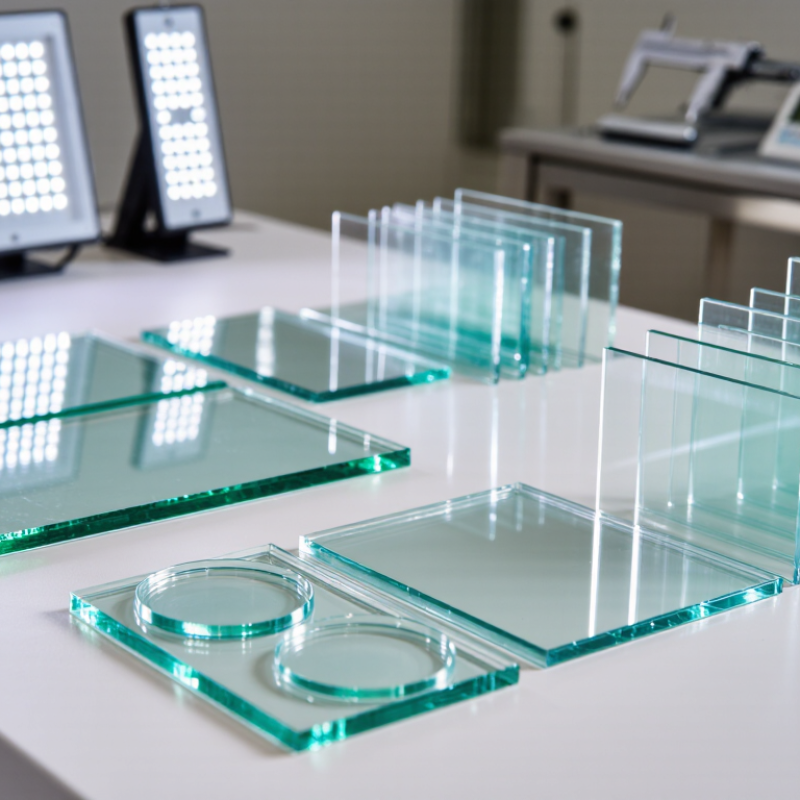
Tempered glass for LED lighting starts with a controlled glass composition. The European Commission Joint Research Centre’s Glass Manufacturing BREF identifies silica, soda, and lime as key ingredients in common soda-lime glass. Typical formulations contain roughly 70–74% silica, 12–16% sodium oxide, and 5–12% calcium oxide, with smaller stabilizer additions. These are ranges, not a recipe.
Manufacturing begins by melting and forming the glass sheet. Cutting and edge finishing happen before tempering, because later machining can weaken the finished panel. The sheet is heated near its softening range, then rapidly cooled with air. This creates surface compression and improves resistance to thermal and mechanical stress. The edges matter. Small chips can become failure points during installation or repeated heating.
For LED covers, composition alone does not determine performance. Designers should check visible-light transmission, haze, thickness, edge quality, and heat exposure in the actual fixture. A clear panel can still create reflections or reduce useful output. I would not choose thickness from impact strength alone; that shortcut misses optical losses and mounting stress. The JRC report describes glass manufacturing broadly, so its composition figures should guide material selection, not replace supplier test data for a specific LED application.
Key Performance Properties in LED Lighting Applications
Tempered glass for LED lighting must do more than resist breakage. It should transmit light consistently while tolerating heat from LEDs and nearby housings. In a fixture, uneven thickness or surface waviness can create visible bands across a wall. That matters in shop displays and linear ceiling lights. Clear glass often preserves color well; low-iron glass can reduce a green tint, but actual light transmission depends on thickness and coatings. Check measured data, not appearance alone.
Thermal performance needs context. Tempered glass handles temperature changes better than ordinary annealed glass, yet it is not immune to thermal shock. A hot spot beneath a sealed lens, cold airflow, or poorly supported edge can still create stress. Ask suppliers for thickness tolerances, heat-treatment records, optical-transmission data, and test conditions. Edge quality is easy to overlook. It is also where cracks may begin. A sample should match the production process, not just look polished on a desk.
Tips: Specify operating temperature, lens-to-source distance, and cleaning method before choosing glass. Request a sample with the intended coating and edge finish. Inspect it under the actual LEDs, from several angles. Small tint shifts can surprise you. I would still validate a full fixture; bench tests rarely reproduce every mounting stress.
Types of Tempered Glass Used in LED Fixtures
Tempered glass in LED fixtures comes in several forms, and each suits a different lighting job. Clear tempered soda-lime glass is a common cover for panels and outdoor luminaires. It protects LEDs from dust and accidental contact while allowing high light transmission. Low-iron glass can reduce the green tint visible at the edges, which matters in bright, neutral-white fixtures. Check the measured transmission, not just the product description.
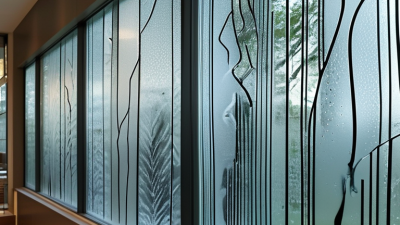
Frosted or etched glass softens harsh points of light and can reduce visible glare. It spreads light, but may lower output slightly. Patterned glass offers another option: fine textures can help disguise individual LED dots, though the effect depends on spacing and viewing angle. For fixtures exposed to rapid temperature changes, tempered borosilicate glass may be suitable because it handles thermal shock better than standard soda-lime glass. Confirm the supplier’s temperature data for the actual thickness and shape.
Surface treatments are not separate glass compositions. A clear pane may be frosted, patterned, or coated, then tempered after cutting and edge finishing. That order matters. Tempered glass generally cannot be cut or drilled afterward. One detail is easy to overlook: coatings can alter color and transmission, even when the glass looks clear on a workbench. Test a sample inside the finished fixture.
How to Evaluate LED Lighting Glass Suppliers in 2026
In 2026, evaluating LED lighting glass suppliers means checking more than price and appearance. Ask for the glass composition, thickness tolerance, visible-light transmittance, and surface-treatment details. A clear panel can still distort light if its coating or edge finish is inconsistent. Request test reports that match the product you plan to order, not a similar sample. Check how the supplier controls heat exposure and thermal shock, since LED assemblies can develop hot spots. Small details matter.
Tips: Order samples from the intended production process. Inspect edges under bright light, compare tint across panels, and ask how defects are recorded. Keep the answers in writing.
A capable supplier should explain its inspection steps and provide traceable batch records. Ask how it handles breakage, dimensional variation, and changes to raw materials. If possible, review a pilot run before approving larger quantities. Technical support matters, too: a useful supplier can discuss glass thickness, mounting pressure, and airflow without promising that glass alone will solve overheating. I would not choose based on a neat brochure. Samples can look excellent, while repeatability remains uncertain; that is worth questioning. Compare the evidence, communication, and production consistency together.
Supplier Selection by Application, Compliance, and Service Needs
For LED fixtures, choose tempered glass around the actual operating conditions, not just a catalogue photo. A canopy light exposed to rain needs different edge finishing and sealing from an indoor cabinet strip. Check thickness, dimensions, light transmission, surface treatment, and allowable temperature range. Ask how the supplier controls cutting and tempering; small edge chips can become failure points. Test a sample in the assembled fixture. It may reveal glare or fit issues that drawings miss.
Compliance needs depend on the destination market and the complete lighting product. Request current test reports, material details, and traceability for the glass specification being quoted. A report for a similar panel may not cover a changed thickness or coating. Get that clarified in writing. Service matters, too: confirm drawing review, sample timing, packaging, replacement procedures, and capacity for repeat orders. A low unit price can lose its appeal when delivery slips. I would compare response quality alongside cost, though response speed alone is not proof of process control. No supplier is perfect. Keep a written acceptance checklist and revisit it after the first production batch.


 Phone
 Send Email
 whatsapp
 Facebook