How to Choose Anti Reflective Glass for Your Needs?
Choosing the right Anti-Reflective Glass starts with understanding what you need it to do. Bright reflections can obscure a framed photograph, a display screen, or products behind a shop window. The same glass may not suit every setting. A gallery often values clear viewing, while a storefront may need a tougher, easier-to-maintain surface.
“Anti-reflective” does not mean reflection disappears completely. Performance varies with glass construction, coating, light, and viewing angle. Small differences can matter. Before comparing products, consider where the glass will be installed and what people will see through it. Ask about visible light transmission, reflected-light levels, durability, and cleaning requirements. Check product specifications, not just a sales label.
Look at real samples in lighting similar to your space. A sample under soft showroom lights may appear different beside a sunny window. For framed art, ask whether the glass also offers suitable UV protection; anti-reflective performance alone does not guarantee it. For frequently touched surfaces, confirm the recommended cleaning method and whether the coating faces inward or outward.
There is no single best choice. Cost, appearance, and maintenance can pull in different directions, and I would not choose from a photograph alone. This guide explains the main factors, compares common applications, and helps you ask suppliers more precise questions. A little doubt is useful. It can prevent an expensive mismatch.
Understanding Anti-Reflective Glass and Its Coatings
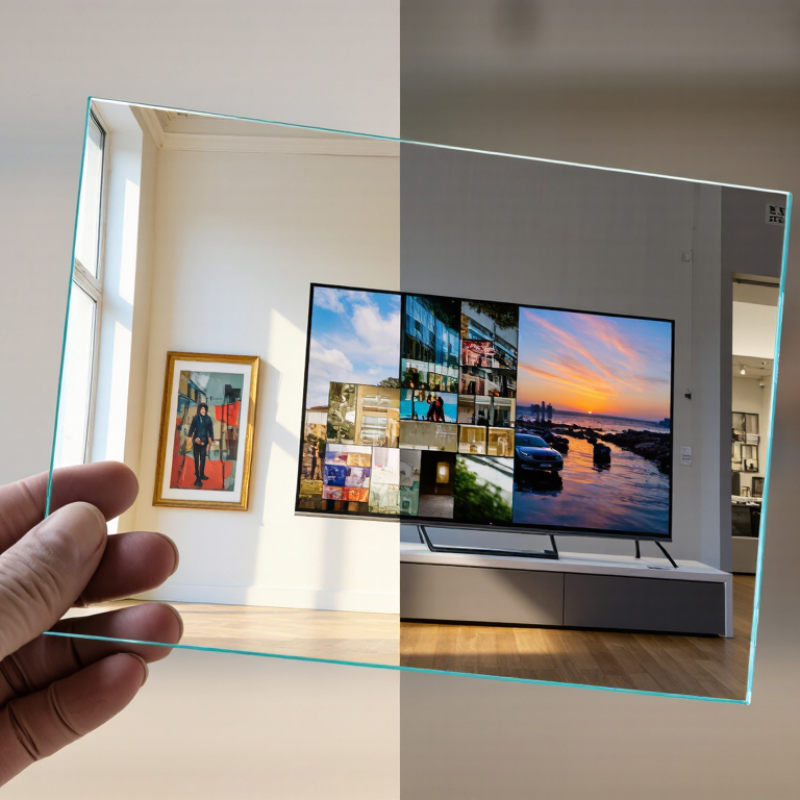
Anti-reflective glass reduces the light reflected from its surface, helping more light pass through. The effect comes from thin optical layers applied to the glass, not from a dark tint. A simple test is to compare reflections: ordinary glass may show a bright room clearly, while coated glass often produces a softer, dimmer reflection. It is not reflection-free.
Coatings work by controlling how light waves reflect at the boundaries between air, coating, and glass. Single-layer coatings can reduce reflections in a selected range of light, while multilayer coatings can work across a broader range. The exact result depends on the layer materials, thickness, and the light’s angle and color. Small differences matter.
For a framed picture, reduced glare can make fine details easier to see under indoor lighting. For a display case or window, consider viewing angles, cleaning needs, and exposure to scratches or moisture. Some coatings are applied to one side; others treat both sides, which can further reduce reflections but may require more careful handling. Ask for measured reflectance data and confirm which surface carries the coating. Specifications can be confusing, and a lower reflection figure does not automatically mean the best choice for every room. Check a sample in the actual lighting if possible.
How to Choose Anti-Reflective Glass for Your Needs?
Typical visible-light performance at normal incidence: standard clear glass reflects about 8% of incoming light from both surfaces, while anti-reflective coatings can reduce reflection to approximately 4%, 1%, or below 0.5%, depending on coating design. Higher-performance coatings improve brightness and contrast but may require greater cleaning care and cost.
Identifying Your Application and Viewing Conditions
Before selecting anti-reflective glass, identify what people need to see through it. A display case in a bright shop has different demands from a framed photograph in a quiet room. For artwork, reduced reflections can reveal fine texture and muted colors. For a touchscreen, clarity matters at changing viewing angles, and the glass must suit regular handling.
Look at the actual lighting. A window opposite the glass may create a sharp reflection, while overhead spotlights can produce bright patches. Note where viewers stand and how far away they are. A coating that performs well straight on may look less effective from the side. Small details matter: even a nearby white wall can reflect across a cabinet door.
Check the glass under conditions close to its intended setting, not just beneath showroom lights. Compare a sample beside the object, at its usual distance, and at different times of day. Ask about visible light transmission, color shift, coating location, and cleaning requirements. These specifications help, but they do not replace a real viewing test. I would not judge clarity from one photograph; cameras often hide reflections or alter color. And a perfect result is not always possible. Strong light behind the viewer can still show up.
Comparing Light Transmission, Glare Reduction, and Color
Choosing anti-reflective glass means balancing three qualities: light transmission, glare reduction, and color neutrality. Higher light transmission can make a room feel brighter, especially near a shaded window or on a cloudy day. Glare reduction matters more where sunlight hits a screen, display case, or work surface. These benefits are related, but not identical. A glass sample that looks clear under showroom lights may behave differently beside a west-facing window at 4 p.m. Test samples in the actual location, if possible.
Color deserves a close look. Some coatings can add a faint green, blue, or purple cast, noticeable against white paper or pale walls. Check the glass from several angles, both indoors and outside. Ask for measured light-transmission and reflectance values, and confirm whether figures refer to the glass alone or the complete window unit. Details matter. A lower reflection reading does not automatically mean the glass will feel brighter in every room. And specifications can be hard to compare across different test methods. I would avoid choosing by a single number; the best balance depends on daylight, interior lighting, and what you need to see through the glass. Sometimes the “clearest” option is not the most comfortable one.
How to Choose Anti Reflective Glass for Your Needs? - Comparing Light Transmission, Glare Reduction, and Color
Note: Figures are typical indicative ranges for clear glass, not guaranteed specifications. Actual transmission, reflectance, and residual color vary with glass thickness, coating design, substrate, wavelength, angle of incidence, and measurement method. Compare product datasheets using the same test conditions; anti-reflective coatings reduce surface reflections, while etched anti-glare surfaces mainly diffuse them.
Choosing Glass Type, Thickness, and Durability
Choosing anti-reflective glass starts with the viewing conditions. A display near a bright window may need stronger glare control than a framed picture in a quiet room. Compare glass samples under the lighting where they will be used. Reflections can look different in a showroom. Pay attention to color, too: some coatings create a slight tint, especially at an angle.
Thickness should match the panel size, support, and installation method. Larger panes generally need more careful structural assessment; do not choose thickness by appearance alone. Ask the supplier or a qualified glass professional to confirm the specification for your dimensions and mounting system. Tempered glass can improve impact resistance, while laminated glass holds fragments together if it breaks. They are not interchangeable in every application. Check the product data for coating location and compatibility with cutting or edge finishing, since these details can affect both appearance and fabrication.
Durability depends on more than the glass itself. Look for clear information about scratch resistance, cleaning, and coating care. A sample may appear flawless, yet fingerprints or harsh cleaners can reveal a different story. Use a soft, clean cloth and follow the care instructions; abrasive pads may damage some surfaces. If the glass will face frequent handling, ask for written guidance on maintenance and warranty coverage. A little uncertainty is normal. Test a sample before ordering multiple panels.
Evaluating Installation, Maintenance, and Cost
Choosing anti-reflective glass involves more than comparing the price per panel. Installation conditions matter. Large panes may need extra support, careful handling, and professional fitting, especially in exposed locations or existing frames. Before ordering, measure the opening and check whether the glass thickness suits the frame and expected use. A small measurement error can mean delays and replacement costs.
Ask the installer how the coating should face, since some products are designed for a specific orientation. Confirm whether cutting, edge finishing, delivery, and removal of old glass are included in the quote. These details can change the total cost. A lower initial price may not cover the work needed for a clean, secure fit.
Maintenance is usually simple, but the coating still deserves care. Use a soft microfiber cloth and a mild, non-abrasive cleaner; gritty dust can leave fine scratches when wiped across the surface. Avoid rough pads and strong chemicals unless the supplier confirms they are suitable. Check the care instructions. In busy spaces, fingerprints and cleaning frequency may affect the glass’s appearance over time. I would also budget for occasional professional inspection on large or hard-to-reach installations. That expense is easy to overlook, and estimates vary by access and local labor rates.


 Phone
 Send Email
 whatsapp
 Facebook