inquiry
Leave Your Message

Top 10 Frosted Glass Manufacturers in China for Global Buyers

Choosing a Frosted Glass manufacturer in China involves more than comparing prices. Buyers must assess surface consistency, thickness tolerance, edge finishing, packaging, and communication. A sample can reveal details a catalog misses: whether the etched finish feels even, whether light diffuses cleanly, and whether fingerprints remain noticeable. Small differences matter.

This guide introduces ten manufacturers for global buyers to research. It is a starting point, not a substitute for supplier checks. Review factory capabilities, request recent project references, and confirm specifications in writing, including dimensions, processing methods, inspection criteria, and packing requirements. Ask how defects are handled. Then compare quotations on the same basis; a lower unit price may exclude important services or protective packaging.

Export experience also deserves a closer look. Clarify lead times, sample schedules, shipping terms, and who coordinates documentation. These are practical questions, but answers can be vague. Push for specifics. Certifications may help, yet buyers should verify their scope and validity rather than rely on a logo alone. A polished website is not proof of consistent production. Nor is one successful sample. Even experienced buyers can overlook a detail when timelines are tight. Use the profiles ahead to build a shortlist, then validate each supplier against your project’s actual requirements.

Top 10 Frosted Glass Manufacturers in China for Global Buyers

Frosted Glass Basics: Acid Etching, Sandblasting, and Typical 3–19 mm Thickness

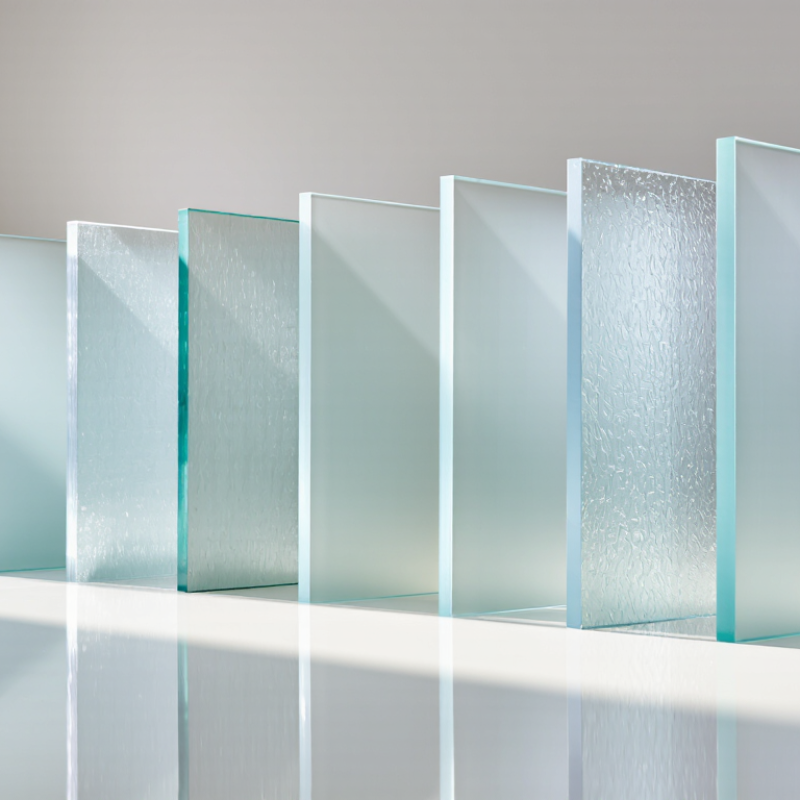
Frosted glass diffuses light while limiting clear views, but the finish depends on how its surface is treated. Acid etching uses chemicals to create a fine, even matte surface. It often feels smooth to the touch and suits doors, partitions, and bathroom screens. Sandblasting drives abrasive particles against the glass, producing a more textured look. It can create patterns, though rougher areas may collect fingerprints and require more careful cleaning. Details matter.

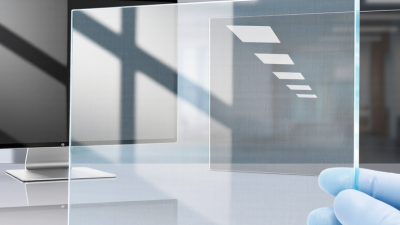
Thickness affects weight, stiffness, edge treatment, and hardware selection; frosting alone does not determine structural suitability. For reference, EN 572-2:2012 lists nominal float-glass thicknesses including 3, 4, 5, 6, 8, 10, 12, 15, and 19 mm. That range is common in architectural specifications, but the right choice depends on panel size, support, and use. A 3 mm sample may look delicate in a hand, while a large 10 mm panel feels substantial. Still, “frosted” is not a complete specification. Buyers should request the process, thickness, finish uniformity, and cleaning guidance in writing, then check a full-size sample under the project’s actual lighting.

Key Performance Metrics: Visible Light Transmission, Haze, Thickness, and Tolerance

For global buyers comparing frosted glass manufacturers in China, performance figures matter as much as appearance. Visible light transmission shows how much light passes through the glass, while haze describes how strongly it scatters light. These values affect privacy and room brightness. A panel can look evenly frosted under showroom lighting yet behave differently beside a window. Request measurements for the actual glass thickness and surface treatment, not just a general product sheet.

Thickness and tolerance influence fit, weight, and installation. Ask suppliers to state nominal thickness, permitted variation, and how measurements are taken. Check several points across a sample, especially near its edges. One overlooked issue: a single sample cannot prove consistent production. Review inspection records or request samples from separate production batches. Even then, results deserve a second look.

Tips: Share your intended use, target light level, dimensions, and acceptable variation before requesting a quotation. Confirm the test method and measuring conditions in writing. Keep a signed sample for comparison during delivery checks. Small differences may be acceptable, but unclear specifications are not.

Safety Standards for Buyers: EN 12150, EN 12600, and ANSI Z97.1

For global buyers, a frosted appearance should never be treated as proof of safety. EN 12150 covers thermally toughened soda-lime silicate safety glass and specifies characteristics such as fragmentation. EN 12600 uses a pendulum impact test to assess human-impact performance and classify the tested glass. ANSI Z97.1 sets impact-test requirements for safety glazing in the United States. These standards are related, but they are not interchangeable. Confirm which markets and applications the order must serve.

Ask for test reports matching the exact glass construction. Check thickness, dimensions, heat treatment, edge finish, and frosting process. A surface treatment may differ from the construction in the report, so verify that the tested sample represents the product being delivered. Request traceable batch details and identification where applicable. Inspect sample edges and surfaces under ordinary site lighting; etched haze can make small chips harder to notice. Paperwork matters. It is not the whole check. A valid report cannot prove every shipment matches the sample. Agree on incoming inspection, packaging, and breakage reporting before production, and ask the supplier to explain any gap between the report and the finished specification.

Top 10 Chinese Frosted Glass Manufacturers: Products, Capacity, and Export Markets

China’s leading frosted-glass manufacturers offer acid-etched and sandblasted panels for doors, partitions, façades, and furniture. Compare thickness, maximum sheet size, edge finishing, and monthly capacity—not just catalogue range. China’s National Bureau of Statistics reported flat-glass output of about 969 million weight boxes in 2023. This broad production figure shows industrial scale, but does not measure frosted glass specifically.

Export readiness varies across suppliers. Some handle cut-to-size orders and protective packing; others focus on large production runs. Check which regions each factory regularly serves, and request recent packing photos and destination-specific references. UN Comtrade groups much flat glass under HS 7005, but this category does not isolate frosted products. Export figures therefore need careful interpretation. A polished website is not capacity evidence.

Tips: Request a sample with your intended finish and thickness. Ask for monthly output, lead time, breakage allowance, and export packing details in writing. Ask for proof. I would still verify stated capacity against a recent production schedule; supplier claims can be optimistic.

How Global Buyers Evaluate Suppliers: MOQ, Lead Time, Quality Control, and Incoterms

For global buyers comparing frosted glass manufacturers in China, the quoted price is only one part of the decision. Ask whether the minimum order quantity applies to standard sheets or custom-cut panels. A lower MOQ may be available for stocked sizes, while custom thicknesses, dimensions, or frosting patterns may require a larger run. Request a written breakdown before approving samples. Small details matter.

Lead time should separate sample preparation, production, inspection, and export packing. Ask for dates, not just “around four weeks,” and clarify when the schedule begins. Frosting can vary in opacity or texture across batches, so define acceptable appearance using a signed sample or documented specification. Check thickness, edge finishing, dimensions, and packaging in the inspection plan. Ask for evidence. Photos help, but they cannot replace agreed measurement records or a suitable pre-shipment inspection.

Incoterms affect who arranges transport, insurance, export clearance, and delivery responsibilities. Confirm the named place and edition in the quotation, then compare offers on the same basis. A low factory price may exclude costs that appear later. No checklist catches every variation. Even careful buyers can overlook breakage risks or unclear responsibility during transit, so discuss claims handling before placing the order. Keep specifications, inspection criteria, and delivery terms in writing.

Top 10 Frosted Glass Manufacturers in China for Global Buyers — Supplier Evaluation Benchmark: MOQ, Lead Time, Quality Control, and Incoterms
Anonymous Supplier Profile Typical Product Focus Indicative MOQ Indicative Lead Time Quality-Control Checks to Confirm Common Incoterms to Discuss Buyer Verification Points
Profile 1 — Architectural glass processor Acid-etched and sandblasted flat glass for partitions, doors, and interiors About 50–100 m² per specification; confirm cut-size and thickness mix About 15–25 working days after drawing approval and deposit Thickness and dimensions; visual uniformity; edge quality; packing inspection; request applicable test reports EXW, FOB, or CIF; name the port and Incoterms® 2020 rule Ask for current production photos, a sample, tolerance details, and written acceptance criteria for surface appearance
Profile 2 — Tempered-glass specialist Frosted tempered glass for shower enclosures, doors, and furniture About 100–200 m² per order; custom shapes may have a separate minimum About 18–30 working days, including processing and tempering Dimensions, holes and notches, edge finish, visual inspection, and tempering documentation; confirm relevant market standard FOB or CIF for container shipments; EXW for buyer-arranged collection Confirm that holes, cut-outs, and edgework are completed before tempering and that approved drawings are controlled
Profile 3 — Laminated-glass processor Frosted laminated glass using an etched or translucent interlayer appearance About 100–200 m² per configuration, subject to interlayer and thickness availability About 20–35 working days after material and artwork approval Glass build-up, interlayer specification, dimensions, visual defects, and documented production checks FOB, CIF, or FCA; agree who handles export clearance and main carriage Request a build-up schedule, interlayer sample, storage guidance, and confirmation of applicable safety-glazing requirements
Profile 4 — Large-format architectural supplier Oversized frosted panels for façades, office fronts, and commercial interiors About 100–300 m²; minimums can depend on sheet size and handling equipment About 25–40 working days; allow extra time for large-format packing and shipment planning Flatness, dimensions, edge condition, surface consistency, crate condition, and loading photographs FOB or CIF; confirm port, container suitability, and responsibility for unloading Verify maximum processable dimensions, crate drawings, gross weight, and destination-country code requirements
Profile 5 — Decorative-pattern processor Patterned, gradient, or partially frosted glass for interior design projects About 50–150 m² per pattern; new tooling or artwork may affect the minimum About 15–30 working days after pattern and sample sign-off Pattern alignment, opacity or translucency consistency, dimensions, color appearance, and pre-production sample approval EXW or FOB; CIF may be available for larger shipments Approve a signed reference sample and specify viewing conditions and acceptable pattern variation
Profile 6 — Custom-cut glass fabricator Frosted panels with polished edges, drilled holes, notches, or shaped outlines About 50–100 m², with minimum charges possible for complex individual pieces About 15–28 working days after CAD drawings are approved Piece-by-piece dimensions, hole positions, edge finish, identification labels, and drawing revision control FOB, FCA, or EXW, depending on shipment size and collection arrangements Send dimensioned drawings with tolerances; require written confirmation of all dimensions before production
Profile 7 — High-volume building-glass processor Repeated-specification frosted glass for hotels, offices, and multi-unit projects About 200–500 m² per production batch; discuss phased releases for larger projects About 20–35 working days; repeat orders may vary with capacity and material supply Incoming-glass checks, batch traceability, sampling plan, dimensional inspection, and final packing records FOB or CIF; consider FCA when the buyer appoints the main carrier Review monthly capacity, production scheduling, batch identification, and remedies for out-of-specification goods
Profile 8 — Small-batch project supplier Mixed-size frosted glass orders for renovations, prototypes, and bespoke interiors About 20–80 m², often subject to a minimum order value or processing charge About 12–25 working days for standard processing; confirm special operations separately Sample-to-order comparison, dimensions, edge finish, piece labels, and protective packaging EXW or FCA for smaller consignments; obtain a separate freight quotation Confirm whether mixed sizes count toward MOQ and request a consolidated packing list by item code
Profile 9 — Export-oriented glass processor Frosted glass supplied with export packing and shipment documentation About 100–200 m², depending on product mix and shipping method About 18–30 working days, plus transit time and any destination inspection Pre-shipment inspection, packing-list accuracy, crate markings, photo records, and requested compliance documents FOB or CIF are commonly discussed; define the named port and insurance responsibilities Check document requirements, cargo insurance scope, wooden-crate requirements, and claim procedures before order confirmation
Profile 10 — Multi-process glass supplier Frosted glass combined with tempering, laminating, insulating, or other secondary processing About 100–300 m² per build-up; each processing route may have its own minimum About 25–45 working days depending on process sequence and component availability Process sequence, component specifications, dimensional checks, appearance, and traceability across production stages FOB, CIF, or FCA; ensure the named delivery point and transfer of risk are explicit Ask which processes are performed in-house, which are subcontracted, and how quality responsibility is managed

Important: These anonymous profiles are illustrative sourcing benchmarks, not verified company rankings or supplier-specific quotations. MOQ and lead-time ranges vary by glass type, thickness, dimensions, processing, order mix, production capacity, and shipping schedule. Confirm specifications, applicable standards, Incoterms® 2020, delivery point, and all commercial terms directly with each shortlisted supplier.