Choosing a reliable Chinese manufacturer matters when sourcing Tempered Glass For Range Hood products. The glass must withstand heat, vibration, cleaning chemicals, and daily kitchen impact. A weak panel can crack suddenly. That risk deserves careful attention.
This guide examines leading China-based manufacturers through practical sourcing criteria. It considers glass thickness, edge polishing, drilling accuracy, screen printing, and curved shaping. It also reviews factory experience, production capacity, quality-control systems, and export communication. Strong suppliers should provide material certificates, inspection records, and clear explanations of applicable safety standards. Independent testing can further verify thermal shock resistance and surface durability. Do not rely only on attractive product photos.
Real experience often reveals small details. Ask how manufacturers protect finished panels during packing and sea transport. Check whether separators prevent scratches between black glass surfaces. Confirm tolerances before approving a sample. A dependable factory should explain its process, not hide behind general promises. Factory audits, sample testing, and traceable batch records can make comparisons more objective.
No supplier is perfect. Some online information may be incomplete or outdated. Even experienced buyers can overlook packaging damage or inconsistent color printing. That is why this overview balances technical evidence with practical observations. It aims to help importers, appliance brands, and kitchen equipment distributors identify manufacturers that deliver stable quality, responsive service, and realistic production support. Careful verification remains essential. The lowest quotation may not represent the lowest total cost.
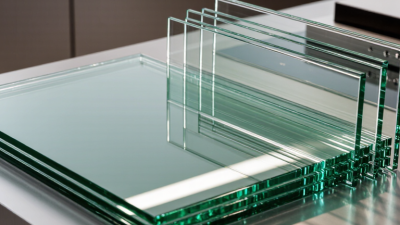
Tempered glass for range hoods is heat-treated safety glass, not ordinary window glass. Manufacturers heat it near its softening point, then cool both surfaces rapidly. This creates compression outside and tension inside. When broken, it usually crumbles into small granules instead of long, sharp shards.
ASTM C1048 gives a useful benchmark: fully tempered glass generally provides at least four times the bending strength of annealed glass. EN 12150-1 also requires controlled fragmentation and thermal testing. These figures matter near cooking heat, steam, oil droplets, and accidental impacts. A 2024 Fortune Business Insights report valued the global flat glass market at more than 120 billion U.S. dollars, showing the scale of the wider supply chain, not a guarantee for every hood panel.
For Chinese range hood manufacturers, quality depends on more than glass thickness. Reliable production checks edge grinding, hole position, flatness, coating adhesion, and repeated heating cycles. A 5-millimeter panel may look strong, yet a tiny untreated edge can become its weak point. That is easy to miss. Buyers should request test records, batch traceability, and compliance documents before comparing suppliers. I would also inspect the silicone seal and metal frame, because glass rarely fails alone. Some suppliers focus heavily on appearance; that approach needs reconsideration. Clear glass, dark glass, and printed glass can all perform differently after coating and tempering.
Tempered glass is heat-treated soda-lime glass designed for greater resistance to impact and sudden temperature changes. The chart uses annealed glass as a baseline index of 100 to show typical performance differences used when evaluating range hood glass panels.
Typical reference values: tempered glass is commonly described as approximately four times more impact-resistant than annealed glass and capable of tolerating thermal shock of about 200°C, compared with about 40°C for annealed glass. Actual performance depends on glass thickness, edge quality, heat-treatment conditions, installation, and product design.
High-quality range hood glass begins with controlled tempering. ASTM C1048 states that fully tempered glass is at least four times stronger than annealed glass of the same thickness. This matters when a hot pan releases steam beneath the hood.
Quality suppliers verify heating, rapid cooling, surface compression, and fragment size under EN 12150 requirements. Safe breakage is essential.
Look closely at the edges. Polished or finely ground edges reduce chips around screw holes and mounting brackets. Glass should remain flat, clear, and free from visible distortion under kitchen lighting.
Low-iron glass can improve brightness, while ceramic frit coatings may protect printed controls from grease and repeated cleaning. Do not ignore thermal cycling. A panel that survives one hot test may still fail after months of sudden heating and cooling.
Professional testing should include impact, thermal shock, coating adhesion, and chemical resistance. The Glass and Glazing Federation identifies edge damage as a common cause of glass failure. That point deserves attention during packaging and installation.
In my experience, many defects begin before assembly, not inside the kitchen. A small corner bruise can spread later. Quality records should show batch inspection, thickness checks, and traceable tempering results. Looks are not enough.
How to Evaluate Chinese Tempered Glass Manufacturers
Selecting tempered glass for a range hood requires more than checking price and polished photographs. Ask for test reports matching the exact glass thickness, coating, edge treatment, and batch. EN 12150 requires heat-soak-related quality controls and fragmentation testing; its test method commonly requires at least 40 fragments within a 50 mm by 50 mm area. Verify the laboratory, report date, sample identity, and factory address. A copied certificate proves little.
Review the manufacturer’s process records. Reliable suppliers control cutting, edge grinding, washing, heating, and rapid cooling. Request furnace temperature charts and inspection records from recent production, not only a sample made for sales meetings. ASTM C1048 classifies heat-treated flat glass and provides relevant testing guidance. Also examine flatness, roller-wave distortion, surface scratches, nickel sulfide risk controls, and thermal cycling results. The China National Accreditation Service can help verify whether a testing laboratory is properly accredited. Still, accreditation does not guarantee every shipment is consistent.
Tips: Order independent pre-shipment testing. Check the glass after drilling and assembly. Confirm tolerances in writing. Ask for a traceable batch code. Visit the factory if volumes justify it. A supplier may answer every question perfectly, yet production discipline can change after the contract. That uncomfortable possibility deserves attention. Do not judge quality from clarity alone; a visually flawless panel may still have weak edges or incomplete records.
| Evaluation Dimension | Key Data or Requirement | Recommended Benchmark | Evidence to Request | Suggested Weight |
|---|---|---|---|---|
| Applicable Standards | Confirmation of the standards used for glass production, safety glazing, electrical appliances, and export markets. | The supplier should identify the exact standard edition, test clauses, and product scope instead of providing only a general certificate. | Standard compliance matrix, laboratory reports, technical datasheet, and signed declaration of conformity. | 15% |
| Glass Composition | Base glass type, nominal thickness, coating compatibility, and resistance to heat and household cleaning chemicals. | Use suitable soda-lime safety glass or another specified glass type according to the approved engineering drawing and operating temperature. | Material declaration, thickness records, incoming-glass inspection procedure, and chemical-resistance test results. | 8% |
| Thickness Control | Common range-hood glass thickness options include approximately 4 mm, 5 mm, and 6 mm, subject to design loading and assembly requirements. | Actual thickness and tolerance must comply with the approved drawing and the applicable glass standard; sampling should be performed with calibrated micrometers. | Dimensional inspection report, calibration certificates, control plan, and retained sample measurements. | 8% |
| Tempering Quality | Heat treatment must produce uniform tempering, adequate surface compression, and safe fragmentation behavior. | For thermally toughened safety glass, surface compression and fragmentation should meet the applicable safety-glass standard and the customer's approved specification. | Tempering furnace records, surface-compression test results, fragmentation photographs, and batch traceability records. | 15% |
| Thermal Shock Resistance | Resistance to rapid temperature changes caused by hot cooking vapors, steam, cleaning, and uneven heating near the hood lamp or motor area. | The test temperature difference, heating time, cooling method, and pass/fail criteria must be defined in the product specification rather than assumed to be universal. | Thermal-shock test procedure, temperature profiles, failure records, and third-party or witnessed test report. | 15% |
| Edge and Corner Processing | Cut edges, drilled holes, slots, corners, and polished areas are critical stress-concentration zones. | Edges should be free from sharp chips and damaging cracks; hole position, corner radius, and edge finish should match the approved drawing before tempering. | Edge-quality standard, first-article inspection report, hole-position measurements, and magnified visual-inspection records. | 10% |
| Flatness and Warpage | Glass distortion can affect touch panels, hinges, seals, decorative printing, and the fit of the range-hood assembly. | Flatness and local distortion limits should be specified on the drawing and measured on a calibrated inspection table or optical system. | Flatness measurement method, inspection frequency, control charts, and sample dimensional report. | 8% |
| Surface Appearance | Inspection of scratches, inclusions, bubbles, roller marks, haze, coating defects, fingerprints, and print misalignment. | Use a written defect catalogue with defined viewing distance, lighting level, inspection time, and acceptable defect size. | Approved visual standard, defect-limit sample board, inspection checklist, and production photographs. | 8% |
| Printing and Decoration | For ceramic ink or decorative printing, evaluate color consistency, adhesion, abrasion resistance, and resistance to cooking oil and cleaning agents. | Printed areas should remain legible and firmly bonded after the agreed abrasion, chemical, humidity, and heat-aging tests. | Ink technical datasheet, color-control records, adhesion test results, abrasion test results, and approved color samples. | 7% |
| Dimensional Capability | Control of overall length and width, hole diameter, hole-to-edge distance, corner radius, and cut-out position. | The supplier should demonstrate stable process capability using repeated measurements; critical dimensions require tighter controls than non-functional dimensions. | Capability study, measurement-system analysis, control plan, and inspection data from multiple production batches. | 8% |
| Traceability | Ability to trace each finished panel to the glass batch, furnace batch, printing batch, inspection records, and shipment carton. | Every shipment should have a lot number and production date, with records retained for the period required by the purchase agreement. | Sample labels, barcode system, batch records, packing-list format, and recall or containment procedure. | 6% |
| Quality Management | Effectiveness of incoming inspection, process inspection, final inspection, nonconforming-product control, and corrective action. | A documented quality system should be supported by recent audit results and evidence that corrective actions are verified for effectiveness. | Quality manual, process flow chart, internal-audit records, corrective-action reports, and nonconformity statistics. | 6% |
| Testing Capability | In-house capability for dimensional checks, visual inspection, fragmentation testing, thermal testing, coating adhesion, and environmental testing. | Critical tests should use calibrated equipment, controlled procedures, trained personnel, and independent confirmation when required by the destination market. | Equipment list, calibration certificates, test-room photographs, operator training records, and external-laboratory reports. | 7% |
| Packaging and Logistics | Protection against edge impact, abrasion, moisture, and carton movement during domestic and international transportation. | Packaging should separate glass panels, protect edges and corners, identify the handling direction, and pass an agreed transport or drop evaluation. | Packaging specification, packing photographs, carton-strength data, loading plan, and transit-damage records. | 4% |
| Supplier Verification | Assessment of production capacity, furnace size, automation level, subcontracting controls, lead time, and after-sales response. | Conduct a documented factory audit and approve samples from at least one normal production run before mass purchasing. | Factory-audit report, production-flow photographs, capacity statement, sample approval record, and business-continuity plan. | 8% |

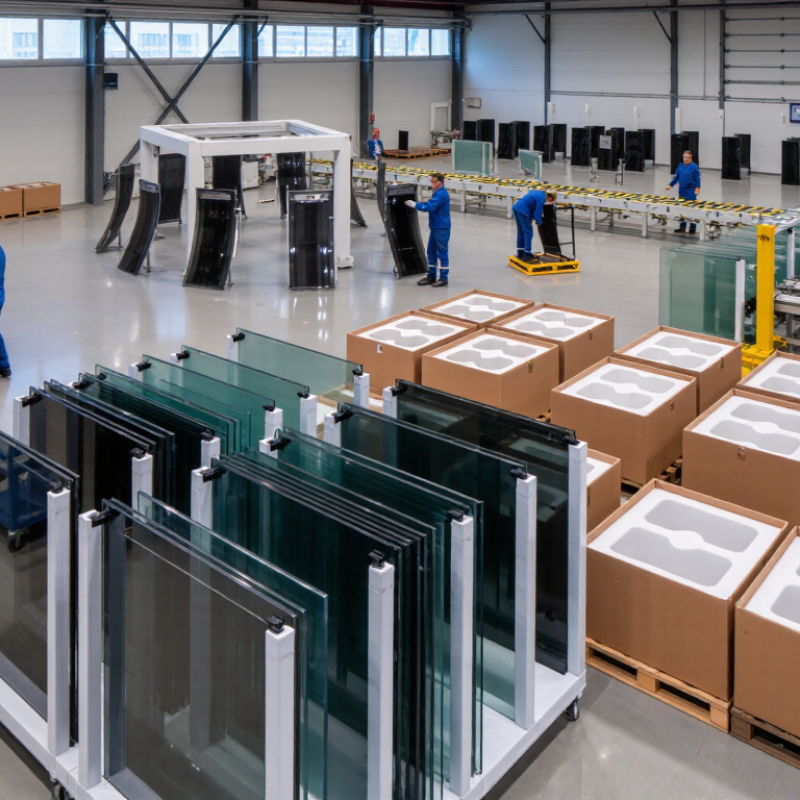
China-based tempered glass suppliers for range hoods serve appliance makers, kitchen equipment companies, and custom fabricators. Their capabilities often include glass cutting, CNC drilling, edge polishing, screen printing, and high-temperature tempering. Common thicknesses range from 4 to 6 millimeters, depending on the hood structure and heat exposure.
A capable supplier should understand more than appearance. It should control flatness, hole position, edge quality, and surface cleanliness. Tempered glass cannot be cut after processing, so drawing review must happen before production.
Many factories offer custom shapes, rounded corners, ceramic ink patterns, and logo-free designs for private-label orders. Some also provide protective film, foam separators, and export cartons with reinforced corners.
Quality evidence matters. Ask for heat-soak testing records, fragmentation checks, dimensional reports, and batch traceability. Suppliers should explain their furnace capacity and inspection frequency clearly. A reliable factory welcomes sample approval before mass production. Small details matter here. A one-millimeter hole deviation can affect final assembly.
Price comparisons can be misleading. A lower quote may exclude printing, special packing, or stricter inspection. Supplier claims also deserve careful review. Not every factory maintains the same process discipline during busy seasons. Buyers should test samples under heat, vibration, cleaning chemicals, and repeated handling. The first sample may look excellent, yet production consistency still needs verification.
Choosing a top tempered glass supplier in China requires more than comparing catalog photos. Experienced buyers inspect glass thickness, flatness, edge finishing, heat resistance, and breakage patterns. For most range hood panels, 4–6 mm glass is common, but thickness depends on size, mounting stress, and nearby heat. Ask for production samples and batch-level inspection reports. Small details matter.
Reliable manufacturers should explain their quality system and provide traceable test records. ISO 9001 supports process control, while product testing should match the destination market. EN 12150 may apply in Europe, while ANSI Z97.1 or related requirements may apply in North America. Certification alone does not prove every shipment’s quality. Request impact results, dimensional reports, heat-treatment data, and a clear warranty. In practical sourcing, attractive certificates can still hide weak packaging.
Pricing changes with thickness, curved geometry, printing, polishing, tooling, order volume, and inspection requirements. A low quotation may exclude export cartons, replacement units, inland delivery, or customs documents. Export files should include invoices, packing lists, test reports, and origin documents when required. Compare landed costs, not unit prices alone. Confirm Incoterms, lead time, pallet protection, moisture barriers, and spare-piece policies. The cheapest quote is rarely safest, but the most expensive quote is not automatically better. Independent inspection costs more, sometimes.